
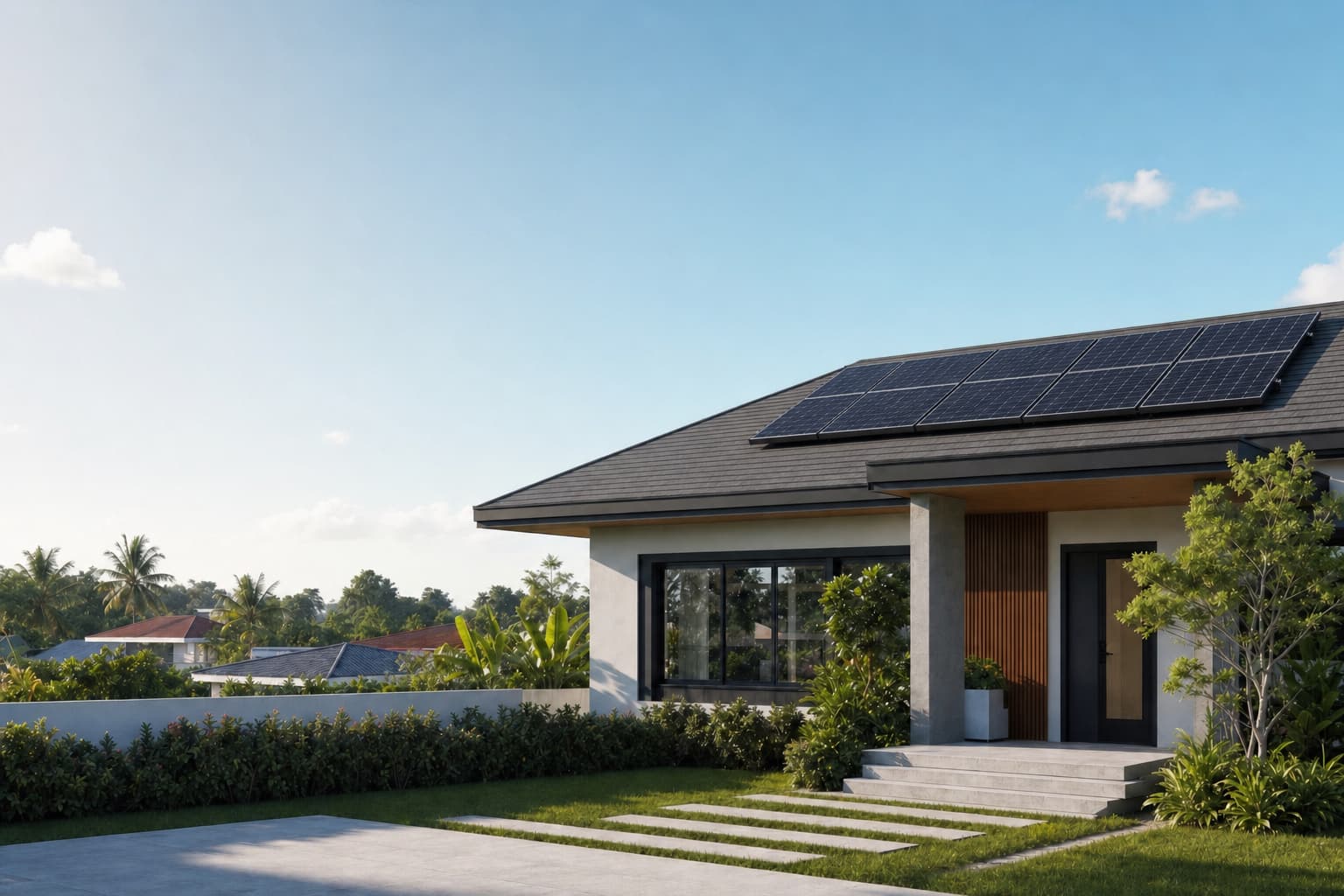
If your main goal today is to lower your electric bill, a grid-tied solar setup can look like the simplest choice. It usually focuses on producing solar power during the day so your home or business buys less electricity from the grid.
But if you are thinking, “Maybe I will add batteries later,” the inverter decision becomes more important.
The lowest upfront inverter path is not always the cleanest future battery path.
Quick answer
If you want solar now and may add batteries later, do not choose by lowest upfront price only. A standard grid-tied inverter is usually good for daytime bill reduction, but adding batteries later may require inverter replacement, alternating-current-coupled storage, or a redesigned system.
Before buying, ask the installer to explain whether the proposed inverter path is:
- Grid-tied for bill reduction only
- Hybrid-ready for future battery planning
- Designed for batteries now
- Not yet confirmed for battery compatibility
That small clarification can prevent expensive redesign later.
Why the inverter path matters
Solar panels produce direct current electricity. The inverter converts that power into usable alternating current electricity for your home or business.
For a basic bill-reduction setup, the inverter is mainly sized and configured to send solar power into your building’s electrical system while the grid remains available.
For a battery-backed setup, the inverter path needs to handle more questions:
- Can the inverter work with batteries?
- Which battery models are compatible?
- Can the inverter operate without batteries first, then add batteries later?
- How will backup loads be separated or protected?
- How will monitoring, export control, and utility requirements be handled?
- If there are multiple meters or electrical services, how will the system be split?
This is why “battery later” should be discussed before the first inverter is purchased.
Path 1: lowest-upfront grid-tied solar
A standard grid-tied system is often the lower-cost starting point for customers whose goal is daytime bill reduction.
This can make sense when:
- Most consumption happens during the day
- The goal is lower monthly electricity cost
- Brownout backup is not a priority
- Batteries are unlikely or only a distant possibility
- The customer wants the simplest starting budget
The tradeoff is future flexibility.
A standard grid-tied inverter normally should not be presented as a battery system. If you decide later that you want batteries, the project may need one of these paths:
- Replace the inverter with a compatible hybrid inverter
- Add a separate alternating-current-coupled battery system
- Redesign the system around a new storage setup
That can still be possible, but it may not be the cheapest total path over time.
Path 2: hybrid-ready planning
A hybrid inverter path is usually considered when the customer wants solar production now but wants to preserve a cleaner future battery option.
This can make sense when:
- You want lower bills now
- You may add batteries later
- You want future backup for selected loads
- You want a more flexible long-term design
- You are willing to check equipment compatibility before buying
Important: do not assume every “hybrid” label means the system is automatically battery-ready for your exact project.
The exact inverter model still needs to be checked for:
- Batteryless operation now, if batteries are not being installed yet
- Approved battery compatibility
- Battery voltage and capacity requirements
- Backup load wiring requirements
- Parallel or multi-inverter capability, if needed
- Export control and monitoring setup
- Utility or net-metering documentation requirements
A good proposal should make this clear instead of using “battery-ready” as a vague sales phrase.
Path 3: batteries now
If backup is already important, it may be better to include batteries from the start.
This is usually the clearer path when you want:
- Brownout backup for selected loads
- Nighttime solar usage support
- More independence from grid interruptions
- A system designed around storage from day one
The downside is upfront cost. Batteries can significantly increase the project budget, so the backup goal should be specific.
Instead of saying “whole house backup” immediately, start with priority loads:
- Internet and office equipment
- Lights
- Refrigerator
- Selected outlets
- Computers or security devices
- Essential business equipment
The battery size and inverter design should follow the loads you actually need to support.
Do not confuse panel expansion with inverter upgrade
Some solar systems allow panel oversizing within the inverter manufacturer’s limits. That does not mean a small inverter becomes a larger inverter later.
For example, adding more solar panels within allowed limits may increase production during more hours of the day, but the inverter still has a rated alternating current output limit. If the future target is much larger, the design may need a larger inverter, a second properly designed inverter, or a different architecture.
This matters for battery planning too. If the inverter is not the right type or not compatible with the future battery setup, the first purchase may become stranded equipment.
What to ask before approving a solar quote
Before approving a solar proposal, ask these practical questions:
- Is this a grid-tied, hybrid, or off-grid inverter path?
- If I add batteries later, will the inverter support that directly?
- Which battery models are compatible?
- Can the inverter operate without batteries first?
- If I have multiple meters, will the system use one inverter or a split-inverter design?
- How will export control or net-metering requirements be handled?
- What loads can be backed up if batteries are added?
- Will adding batteries later require new wiring, protection devices, or inverter replacement?
If the answer is unclear, treat the proposal as a bill-reduction system only until the battery path is confirmed.
For businesses and offices
For offices, clinics, small warehouses, and commercial spaces, the daytime load can make solar savings more attractive because consumption often happens while the sun is available.
But commercial sites can also have more complex electrical setups:
- Multiple Meralco bills
- Multiple meters
- Separate tenant loads
- Three-phase equipment
- Different operating hours by area
- Larger air-conditioning loads
- Server, security, or office equipment that may need backup
If there are two meters or two separate electrical services, one inverter should not be assumed to reduce both bills automatically. The installer should confirm the electrical service setup and design the inverter architecture properly.
In some cases, a split-inverter setup may be cleaner, with each inverter assigned to its own service side. In other cases, one properly sized system may be better if the building has one consolidated service. This should be validated before final design.
Naxo Solar’s recommendation
If batteries are only a maybe, we usually recommend comparing two paths clearly:
- Lower upfront grid-tied path for daytime bill reduction
- Hybrid-ready planning path if batteries are likely later
The right answer depends on your bill, usage pattern, site, budget, and backup goal.
What matters is that the proposal should not hide the tradeoff. You should know whether you are buying the cheapest bill-reduction setup today or protecting a future battery path.
Next step
Send Naxo Solar your latest electric bill and tell us one thing:
Do you want batteries now, later, or not sure yet?
From there, we can prepare a clearer first estimate and explain which inverter path makes the most sense for your home or business.